Meredith White (Mook Sea Farms), Mike Congrove (Oyster Seed Holdings) and Peter Hughes (Atlantic Cape Fisheries) will share their perspectives about the challenges related to ocean acidification facing the commercial shellfish industry and discuss the research and technology they’ve invested in to mitigate the impacts of acidification. Their presentations will be followed by a Q&A discussion with scientists Joe Salisbury, Jeremy Testa, and Daphne Munroe whose areas of expertise focus on carbonate chemistry and how it relates to sustainable management of shellfish and aquaculture resources.
Please register at:
https://attendee.gotowebinar.com/register/2594432230985442306
After registering, you will receive a confirmation email containing information about joining the webinar.
Mid-Atlantic Fish Habitat is Changing
Changes in the Northwest Atlantic Ocean shelf ecosystem will force ocean fish and invertebrate species to move. Fish are sensitive to water temperature, and as it becomes too warm, populations will shift to where the water temperature is optimal for them and their prey. This is occurring through multiple processes at different rates, with different species moving or recruiting into new areas. Along the Atlantic coast, generally, more species of fish will move northward and poleward, or further offshore into deeper cooler waters to where the temperature range is more habitable for them. Climate-driven shifts in marine fish species create cross-disciplinary and often contentious issues for resource managers and decision-makers. Ecosystem level changes will impact fisheries management, coastal communities and economies, as well as other regional ocean uses that contribute to the fabric of the coastal economy.
This session is intended to help Mid-Atlantic Committee on the Ocean (MACO) members and stakeholders better understand how research examining fish species and fish habitat shifts will contribute to the body of knowledge to help fishermen, fisheries managers, ocean use planners, and coastal communities track ocean change, assess fisheries resources at risk, and ultimately safeguard the nation’s valuable marine fish stocks in this dynamic and ever changing ocean space.
The session will include presentations from:
- Vincent S. Saba: NOAA National Marine Fisheries Service(NMFS)/Princeton University Geophysical Fluid Dynamics Laboratory
- Rich J. Bell: The Nature Conservancy
- Victoria Kentner and Chris Haak: Integrated Statistics/NOAA NMFS/Monmouth University
- Emily Farr, Mike Johnson, and Mark Nelson: NOAA NMFS
- James W. Morley, East Carolina University, Coastal Studies Institute
The panel of experts will then answer questions and share their thoughts on this pressing issue in our region.
Please register for this webinar. Registration is REQUIRED due to a maximum number of participants allowed by the webinar platform. A wait list will be kept in the event that capacity is reached.
Questions: info@legacy.midatlanticocean.org
MARCO and MACO events are made possible by the Gordon and Betty Moore Foundation.
To provide another opportunity to those who were not able to join the Mid-Atlantic Ocean Forum webinar on May 19th, MACO will convene a second abbreviated Mid-Atlantic Ocean Forum webinar on Tuesday June 23 from 10 – 11:30 am.
This webinar is structured like the first webinar to provide engaging opportunities for you to provide your input on MACO activities, and “brainstorm” issues for further collaboration. The information from this webinar will be combined with the information from the May 19 webinar to help inform our regional collaboration efforts.
This is the draft agenda for the webinar.
To prepare to participate, please review the May 19 Webinar Recording and Background Materials, and the Work Group Priorities. Please register so that we can be in touch if there are additional materials to be distributed before or after this webinar.
Please mark your calendars and plan to join us on June 23rd!
Questions: contact Judy Tucker (info@legacy.midatlanticocean.org).
This Forum is supported by funding from the Gordon and Betty Moore Foundation.
The Mid-Atlantic Fishery Management Council’s October meeting will be held October 5-8, 2020. The meeting was originally scheduled to be held in Riverhead, NY. Due to ongoing concerns about COVID-19 and public safety, the meeting will be held via webinar. Briefing materials will be posted below as they become available. AGENDA
Questions? Contact Mary Sabo at msabo@mafmc.org, (302) 518-1143.
Public Comments
Written comments must be received by 11:59 p.m. on September 23, 2020 to be included in the briefing book. Comments received after this date but before 5:00 p.m. on October 1, 2020 will be posted as supplemental materials on the Council meeting web page. After that date, all comments must be submitted using an online comment form available at https://www.mafmc.org/comments/october-2020-public-comments.
REGISTER NOW
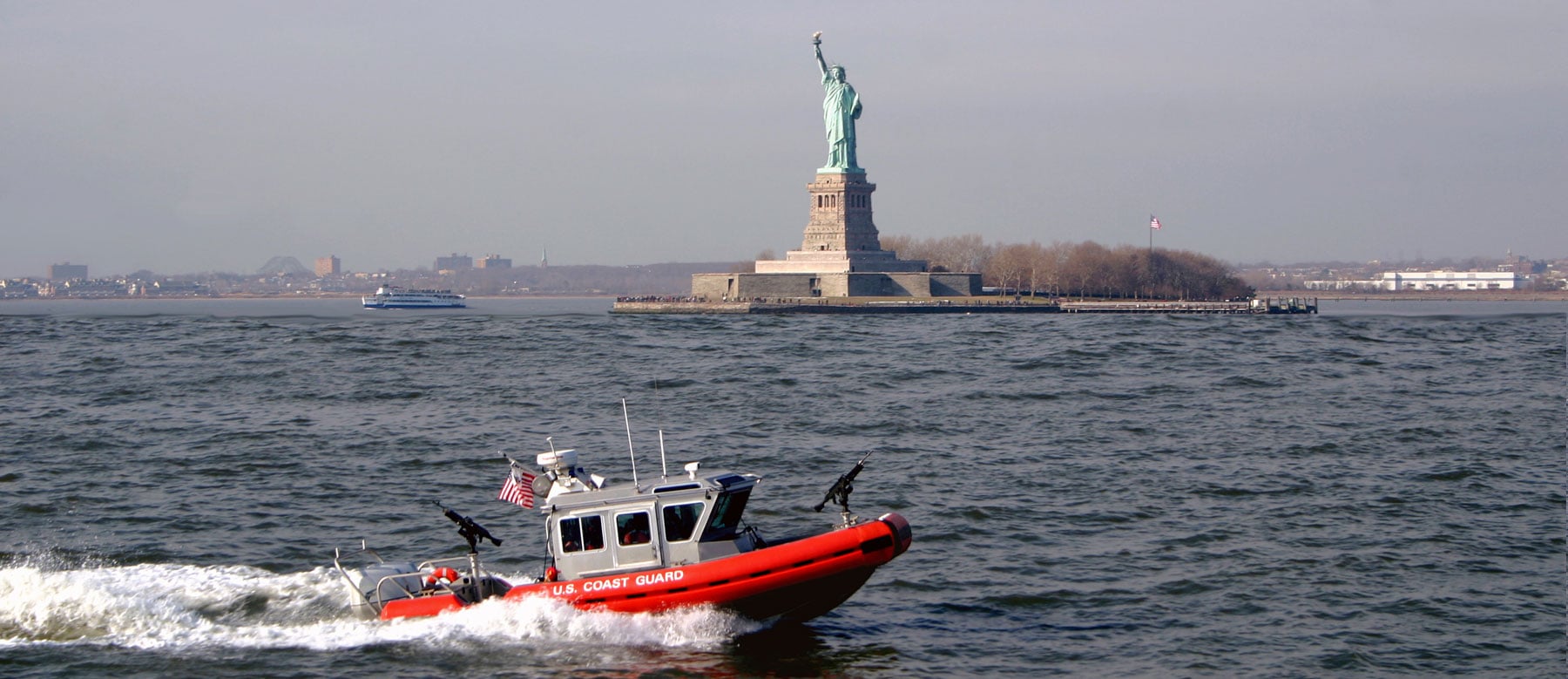
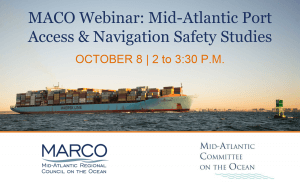
The Mid-Atlantic Committee on the Ocean (MACO) will host a public webinar on Oct. 8 at 2 p.m. that features discussion from U.S. Coast Guard representatives about port access and navigation safety studies that the agency is leading along the Atlantic Coast as offshore wind development proceeds. The free session will also include a panel discussion with representatives of the port, maritime ind offshore wind industries.
The Coast Guard is currently conducting four Port Access Route Studies (PARS) for areas including the Northern New York Bight, the New Jersey coast and Delaware Bay approaches, the Chesapeake Bay approaches, and the North Carolina coast. The purpose of the studies is to evaluate the adequacy of existing vessel routing measures and determine whether changes are necessary in these areas due to factors such as offshore wind development, current port capabilities and anticipated improvements, increased vessel traffic, existing and potential anchorage areas, effects of weather and navigational difficulty. The Coast Guard is also evaluating a potential system of fairways intended to ensure that traditional navigation routes along the East Coast are kept free from obstructions that could impact navigation safety.
The webinar will begin with presentations on the studies by George Detweiler, Michele DesAutels and Capt. Maureen Kallgren of the U.S. Coast Guard. Nick Napoli and Karl Vilacoba of the MARCO Data Portal team will demonstrate interactive maps showing the study areas online. Afterward, a panel of industry stakeholders including Will Fediw of the Virginia Maritime Association, Stuart Griffin of the Pilots’ Association for the Bay and River Delaware, Jeff Kaelin of Lund’s Fisheries, and Tom Vinson of the American Wind Energy Association will provide perspectives on navigation safety. The panel will be moderated by Tony MacDonald of the Monmouth University Urban Coast Institute. Members of the audience will be welcome to take part in an open Q&A session with the speakers.
BOEM is hosting a Virtual New York Bight Intergovernmental Renewable Energy Task Force meeting on April 14 and 16, 2021, which will include an update on BOEM’s renewable energy planning activities and an opportunity for the public to provide input on a draft Proposed Sale Notice for the New York Bight.
For more information and to register for the Task Force Meeting, visit the New York Bight Task Force Virtual Meeting Room. Times will be announced soon.
Sincerely,
NYSERDA Offshore Wind Team
BOEM is hosting a Virtual New York Bight Intergovernmental Renewable Energy Task Force meeting on April 14 and 16, 2021, which will include an update on BOEM’s renewable energy planning activities and an opportunity for the public to provide input on a draft Proposed Sale Notice for the New York Bight.
For more information and to register for the Task Force Meeting, visit the New York Bight Task Force Virtual Meeting Room. Times will be announced soon.
Sincerely,
NYSERDA Offshore Wind Team
Monday, May 3, 2021 12:30 – 4:00 PM
Tuesday, May 4, 2021 9:30 AM – 3:00 PM
Wednesday, May 5, 2021 9:15 AM – 1:45 PM
Thursday, May 6, 2021 9:30 AM – 12:30 PM
For more information please visit the Forum web page.
You are invited to The Great Atlantic Climate Conveyor Belt and How It’s Changing — the second in a series of webinars on Climate-Induced Ocean Changes. Our speakers include:
- Dr. Rick Lumpkin, Acting Director of the Physical Oceanography Division of NOAA’s Atlantic Oceanographic and Meteorological Laboratory, who will present on “Observing the structure and variability of the Atlantic Meridional Overturning Circulation“
- Dr. Thomas Delworth, Senior Scientist at NOAA’s Geophysical Fluid Dynamics Laboratory), who will present on “Model-based predictions and projections of North Atlantic climate variability and change“
You are invited to The Causes and Consequences of a Warming Ocean on Thursday, July 29 — the third in a series on climate-induced ocean changes. Our speakers include:
- Dr. Hillary Scannell, a Postdoctoral Research Scientist at the Lamont-Doherty Earth Observatory at Columbia University, on “Drivers and mechanisms of marine heatwaves in the Northwest Atlantic“
- Dr. Andrew Pershing, Director of Climate Science at Climate Central, on “Impacts of ocean temperature extremes on northeast ecosystems and economic”
Join us on July 29th at 9:30 am as we continue to explore how a changing climate is impacting the ocean water of the North Atlantic. “Scientists estimate that the oceans have absorbed more than 90 percent of the heat trapped by excess greenhouse gases since mid-century . . . This excess heat is increasing not only baseline ocean temperatures but also the frequency and duration of marine heat waves,” (New York Times, March 4, 2019).
Please register in advance of the webinar at https://register.gotowebinar.com/rt/3380567658244280336. This webinar series is being co-sponsored by NOAA’s Eastern Region Climate Team, the Mid-Atlantic Committee on the Ocean (MACO) and the Mid-Atlantic Regional Association of Coastal and Ocean Observing Systems (MARACOOS).