The OA Alliance will provide an overview of Ocean Acidification Action Plans. Case studies from New York and Maine will provide examples of process, partnerships, data/ research and content that are informing state’s OA Action Plan recommendations.
Speakers: Jessie Turner, Project Manager, OA Alliance; Sherryll Jones, New York State Ocean Coordinator, Atlantic States Marine Fisheries Commission, New York State Department of Environmental Conservation; Esperanza Stancioff, Chair of the Maine Ocean and Coastal Acidification Partnership, Extension Professor, Climate Change Educator University of Maine; Nathan Robbins, Climate and Adaptation Program, Commissioner’s Office, Maine Department of Environmental Protection; Kisha Santiago-Martinez, New York Department of State; Chair, Mid-Atlantic Regional Council on the Ocean (MARCO)
Registration link: https://attendee.gotowebinar.com/register/7495166662896159233
For more information: info@midacan.org
The dated for this event have been changed to November 16 – 17, 2020. Please go to that date on the MARCO calendar for registration information.
The New York Energy Research and Development Authority is hosting its second State of the Science Workshop on Offshore Wind Energy on May 5-6, 2020.
The two-day workshop will focus on assessing the state of the knowledge regarding offshore wind development’s cumulative effects on populations and ecosystems and identify key studies that could be conducted in the next 3-5 years to improve our understanding of cumulative biological impacts as the offshore wind industry develops in the U.S.
- The first day of the workshop will consist of plenary presentations on frameworks for understanding cumulative impacts as well as the current state of knowledge for different taxonomic groups.
- The second day will largely consist of smaller workshops focused on developing research plans to improve our understanding of cumulative impacts for a range of taxonomic groups, including benthos, fishes and mobile invertebrates, birds, bats, marine mammals, sea turtles, and habitats and ecosystems. Participation in breakout groups will require prior approval from workshop leads.
A poster session will be held on the evening of May 5, where workshop attendees will have an opportunity to share their work relating to wildlife and offshore wind (posters do not have to focus on cumulative impacts). A call for poster abstracts will be issued in early 2020.
There is also an opportunity to co-locate additional related meetings at the venue on May 7. If interested in planning a meeting or reserving room space, please contact julia.gulka@briloon.org.
State of the Science Workshops bring together stakeholders engaged with environmental and wildlife research relevant to offshore wind energy development in the eastern U.S. These workshops promote regional coordination and collaboration, and serve as a forum to share information on efforts to understand, minimize, and mitigate environmental impacts from offshore wind energy development. Workshops bring together scientists to present and discuss their research, but are open to members of the public with prior registration.
To request to be added to the workshop mailing list, please visit nyetwg.com.
For more information about the workshop, please contact conference organizers Kate Williams and Julia Gulka (Kate.Williams@briloon.org, Julia.Gulka@briloon.org).
Registration Is Now Open
We hope you will join us!
Keynote Remarks: Alicia Barton, President and CEO of the New York Energy Research and Development, will provide opening Keynote Remarks to be followed by a plenary panel.
Panel: Perspectives on Policy, Technology and Climate Perspectives on Future Ocean Management
Deerin Babb-Brott, Principal Assistant Director for Oceans and Environment, White House Office of Science and Technology Policy
Walt Musial, Researcher VI-Mechanical Engineering, National Renewable Energy Laboratory
Charles Stock, NOAA Geophysical Fluid Dynamics Laboratory
Interactive opportunities for participants to engage the presenters, ask questions, provide input on MACO activities, and “brainstorm” recommendations for additional regional collaboration.
Drs. Emily Osbourne and Shannon Meseck will discuss the NOAA Ocean Acidification Research Plan, which outlines research goals both nationally and for the Mid-Atlantic region over the next decade.
Dr. Emily Osborne is a scientist at the National Oceanic and Atmospheric Administration (NOAA) and works currently within the research branch of the agency for the Ocean Acidification Program. Since joining NOAA in 2017, she has served as an editor and author for several international and national climate assessments, worked to develop decadal agency-wide and interagency research strategies, and published peer-reviewed original research on ocean and climate science. Emily earned her PhD in Marine Science from the University of South Carolina in 2016 and a BS in Geology from the College of Charleston in 2012. Her research expertise is in developing paleo-proxies using the fossil record preserved on the seafloor to understand ocean conditions of the past but her scientific interests span a broad range of global change issues.
Dr. Shannon Meseck is a research scientist at the National Oceanic and Atmospheric Administration National Marine Fisheries Laboratory (NOAA/NMFS) in Milford, CT. Since joining NOAA in 2002, she has served as a research examining environmental effects on marine bivalves. In 2009, she has worked on how ocean acidification affects a variety of marine organisms including phytoplankton, bivalves, and fish. She has worked to develop decadal agency-wide and interagency research strategies, and published peer-reviewed original research on ocean and climate science. Shannon earned her PhD in Oceanography from Old Dominion University in 2002and a BS in Environmental Science/Chemistry from the SUNY Plattsburgh in 1997.
Registration information and additional details are below, we hope you’ll join us!
Register here: https://attendee.gotowebinar.com/register/1173005590463653387
Protecting biodiversity and building a sustainable global economy that protects nature is critical to people’s health and well-being. With its accessible virtual format, Capitol Hill Ocean Week 2020 is the opportunity for people from across the U.S. and the globe to engage in dialogue on actions we can take to conserve the variety of life on Earth for the long term health of our communities and the planet.
https://marinesanctuary.org/event/capitol-hill-ocean-week-2020/#schedule
Mid-Atlantic Fish Habitat is Changing
Changes in the Northwest Atlantic Ocean shelf ecosystem will force ocean fish and invertebrate species to move. Fish are sensitive to water temperature, and as it becomes too warm, populations will shift to where the water temperature is optimal for them and their prey. This is occurring through multiple processes at different rates, with different species moving or recruiting into new areas. Along the Atlantic coast, generally, more species of fish will move northward and poleward, or further offshore into deeper cooler waters to where the temperature range is more habitable for them. Climate-driven shifts in marine fish species create cross-disciplinary and often contentious issues for resource managers and decision-makers. Ecosystem level changes will impact fisheries management, coastal communities and economies, as well as other regional ocean uses that contribute to the fabric of the coastal economy.
This session is intended to help Mid-Atlantic Committee on the Ocean (MACO) members and stakeholders better understand how research examining fish species and fish habitat shifts will contribute to the body of knowledge to help fishermen, fisheries managers, ocean use planners, and coastal communities track ocean change, assess fisheries resources at risk, and ultimately safeguard the nation’s valuable marine fish stocks in this dynamic and ever changing ocean space.
The session will include presentations from:
- Vincent S. Saba: NOAA National Marine Fisheries Service(NMFS)/Princeton University Geophysical Fluid Dynamics Laboratory
- Rich J. Bell: The Nature Conservancy
- Victoria Kentner and Chris Haak: Integrated Statistics/NOAA NMFS/Monmouth University
- Emily Farr, Mike Johnson, and Mark Nelson: NOAA NMFS
- James W. Morley, East Carolina University, Coastal Studies Institute
The panel of experts will then answer questions and share their thoughts on this pressing issue in our region.
Please register for this webinar. Registration is REQUIRED due to a maximum number of participants allowed by the webinar platform. A wait list will be kept in the event that capacity is reached.
Questions: info@legacy.midatlanticocean.org
MARCO and MACO events are made possible by the Gordon and Betty Moore Foundation.
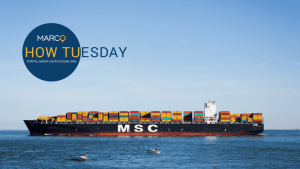
Join us on June 16 at 2 p.m. for the latest installment of our “How Tuesday” webinar series dedicated to U.S. Coast Guard data recently published on the Portal. Two new maps show a Port Access Route Study (PARS) area extending offshore from Long Branch, New Jersey, to the Ocean City, Maryland, area, and a proposed anchorage area near the approach to the Cape Fear River in North Carolina. In this webinar, Jerry Barnes and Matt Creelman of the U.S. Coast Guard’s Fifth District will provide additional information on the study and anchorage area, demonstrate the new maps, and discuss how the Portal can be used to analyze the sites and inform public comments submitted via the Federal Register.
The webinar is free and open to the public. For planning purposes, please register in advance to Karl Vilacoba at kvilacob@monmouth.edu.
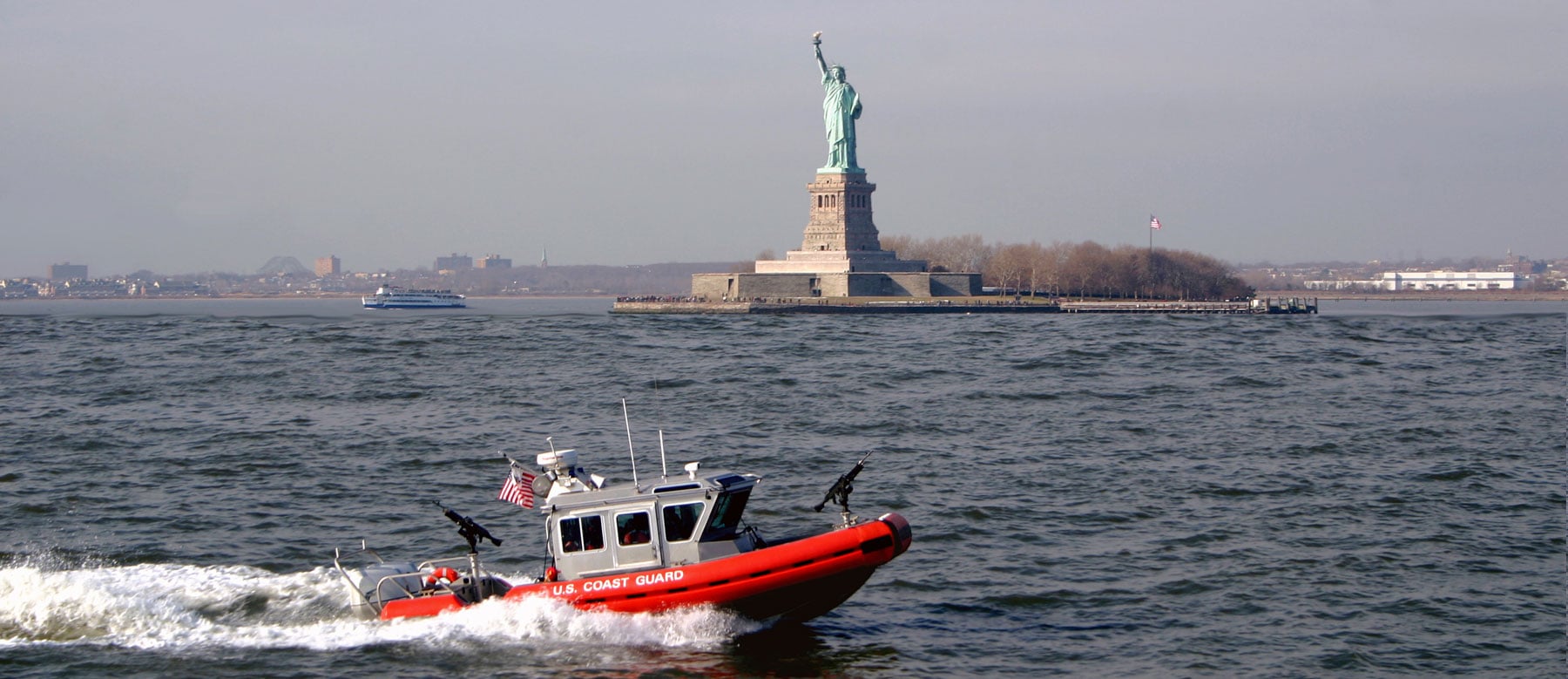
To provide another opportunity to those who were not able to join the Mid-Atlantic Ocean Forum webinar on May 19th, MACO will convene a second abbreviated Mid-Atlantic Ocean Forum webinar on Tuesday June 23 from 10 – 11:30 am.
This webinar is structured like the first webinar to provide engaging opportunities for you to provide your input on MACO activities, and “brainstorm” issues for further collaboration. The information from this webinar will be combined with the information from the May 19 webinar to help inform our regional collaboration efforts.
This is the draft agenda for the webinar.
To prepare to participate, please review the May 19 Webinar Recording and Background Materials, and the Work Group Priorities. Please register so that we can be in touch if there are additional materials to be distributed before or after this webinar.
Please mark your calendars and plan to join us on June 23rd!
Questions: contact Judy Tucker (info@legacy.midatlanticocean.org).
This Forum is supported by funding from the Gordon and Betty Moore Foundation.